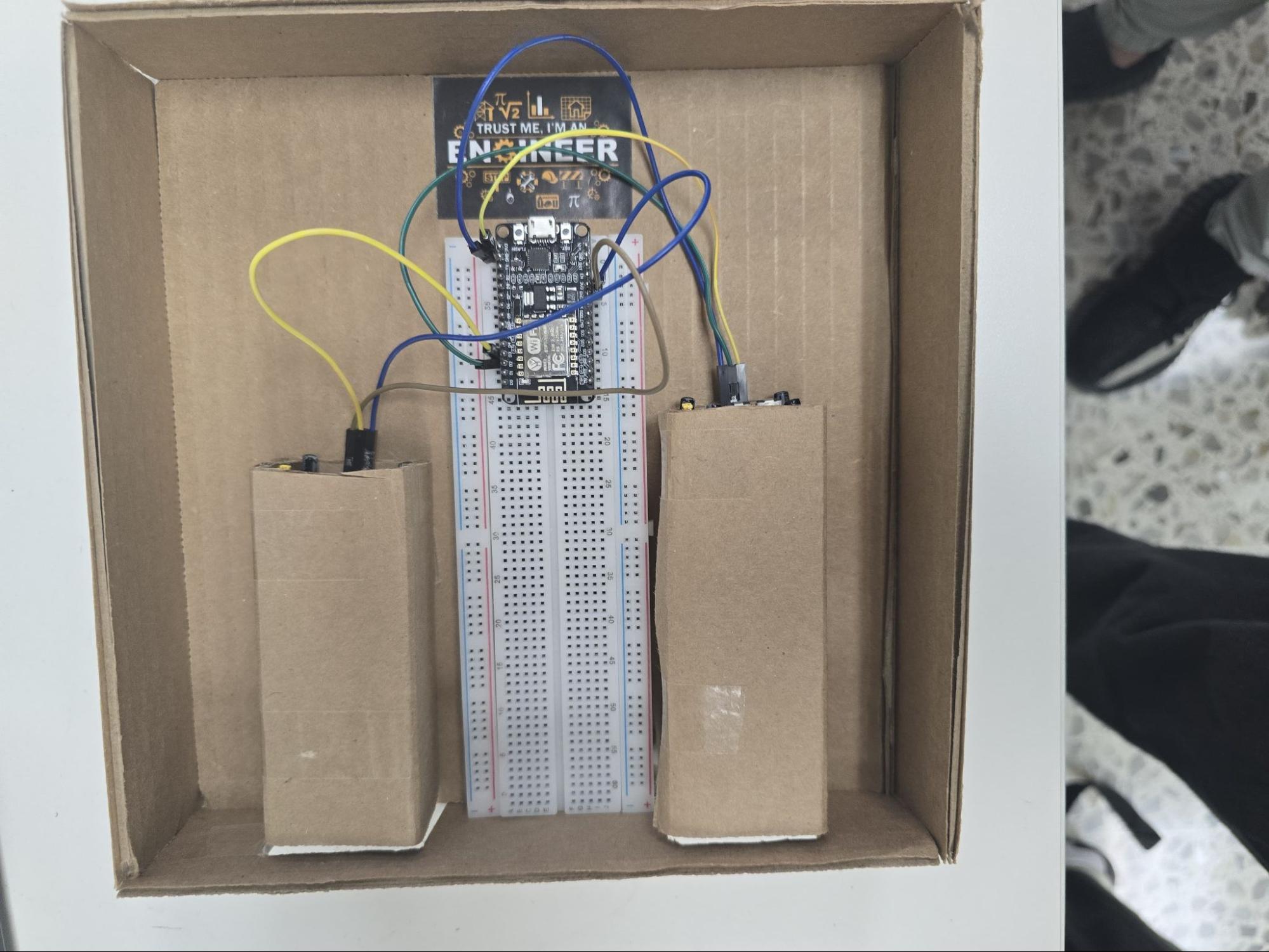
Smart room occupancy / Data & IoT
Connecting a room to the data it generates.
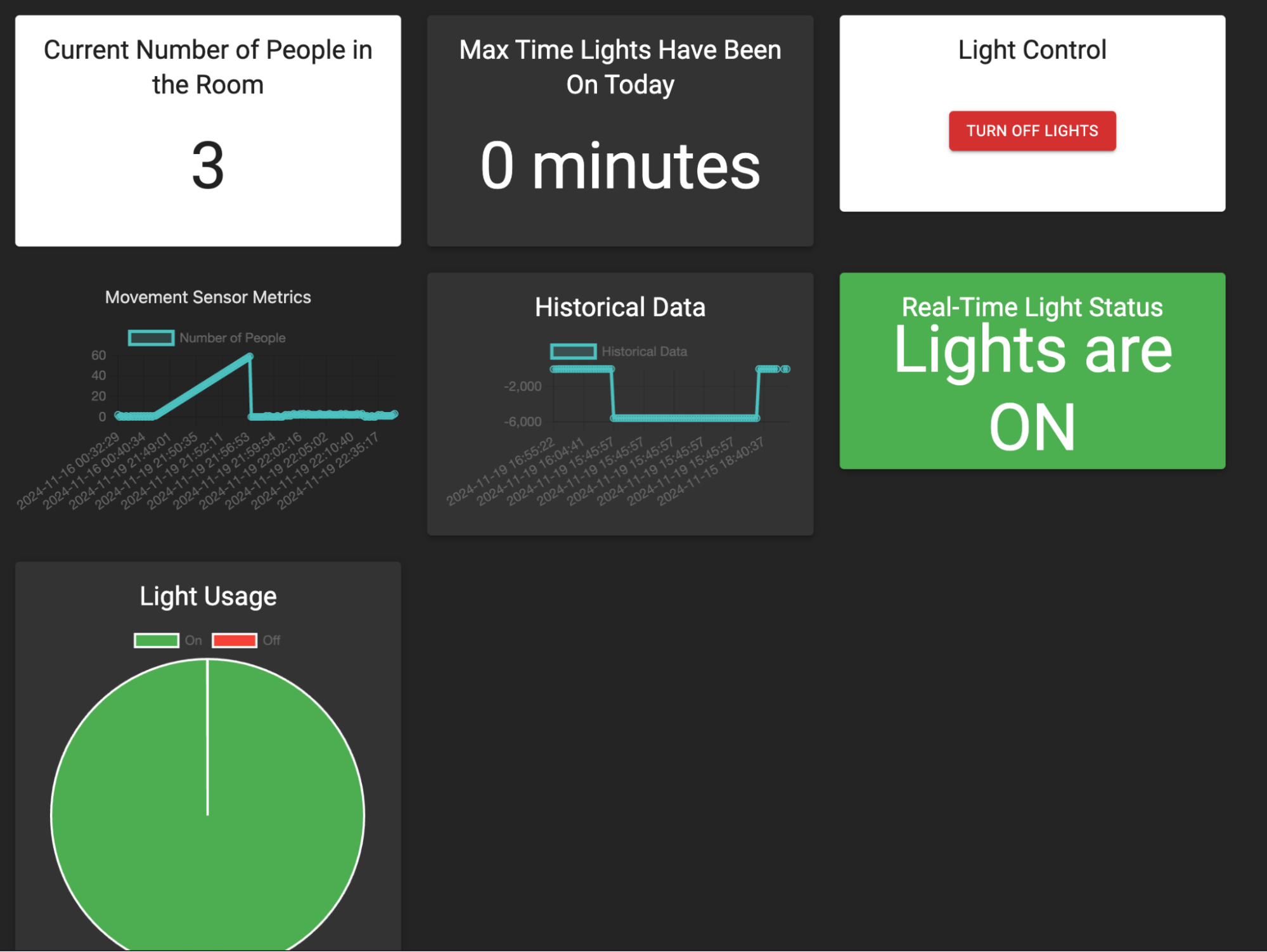
An IoT project connecting motion sensors, a database, and a web interface to explore occupancy and lighting use.
- My role
- IoT / full-stack development
- When
- 2024
- Built with
- PIR sensors · NodeMCU · Arduino · C++ · Node.js · React · MySQL
Explore how it works
Try it yourself ↓A useful signal needs a little context.
Send motion and noise pulses, tune the filter, and advance time to explore occupancy detection.
Send a qualifying pulse to mark the room occupied.
Time advances only when you click. The example light turns on below 40% ambient light while the room is marked occupied.
A manual simulation of PIR signal filtering and occupancy history. Thresholds and the lighting response are illustrative. PIR detects motion, not the number of people; no sensor is connected.
The challenge
Room activity is physical, but understanding patterns requires collecting it consistently. This project connected sensor readings to a software interface for investigating occupancy and lighting use.
How I built it
Bring the hardware online
PIR motion sensors and a NodeMCU provided the hardware layer, with C++ code developed through the Arduino tooling.
Carry the signal through the stack
A Node.js backend connected readings to MySQL. A React interface exposed the resulting occupancy data and trends.
Work with imperfect input
The project involved sensor calibration, filtering, database queries, and debugging the communication between physical devices and the web application.
What came out of it
An integrated hardware-and-software project demonstrating how sensor data can inform a view of room activity, with practical experience connecting embedded code, an API, a relational database, and a web interface.
Sources & project context
- Original portfolio case study, reviewed October 2026
- Related client and server project structure, reviewed October 2026
More from the project