Film and Series Database Application

Film and Series Database Application

C++OOPData StructuresFile Handling
Software Development2024

OVERVIEW

Film and Series Database Application

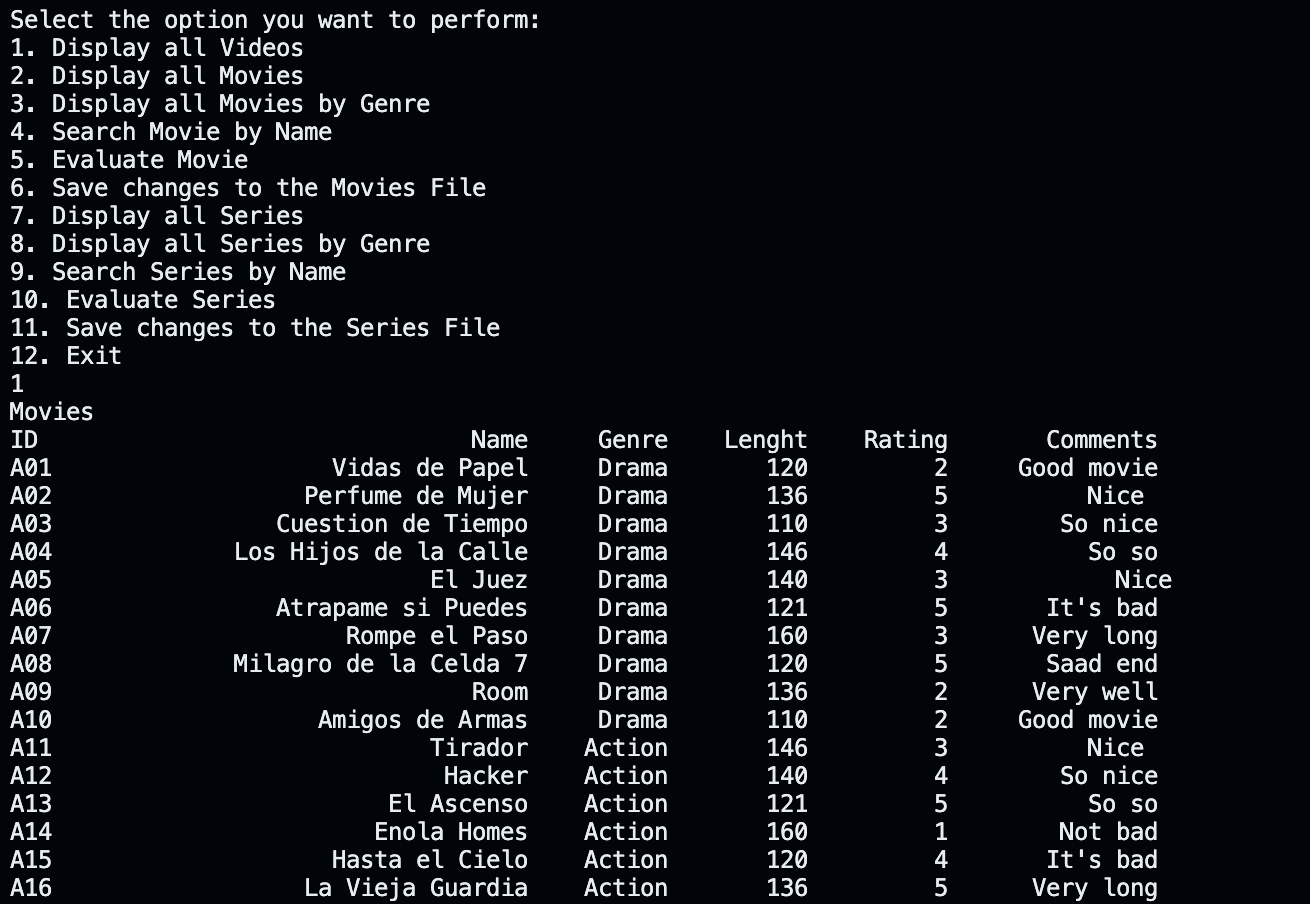
The Film and Series Database Application is an interactive, C++-based program built using Object-Oriented Programming (OOP) principles. It enables users to explore a catalog of films and series by providing features like search, filter, and rating modification. The project demonstrates proficiency in managing and retrieving data efficiently with data structures and file handling.

KEY FEATURES

  • Search Functionality: Allows users to search for specific titles by film or series name, genre, or release year.
  • Filtering Options: Users can filter the catalog by various criteria, such as genre or rating, to find content that matches their preferences.
  • Catalog Display: Presents users with a complete, organized list of films and series available in the database.
  • Rating Modification: Users can update and save ratings for individual entries, offering a customized user experience.
  • Data Management: Implements file handling to store and retrieve catalog data, ensuring data persistence and program flexibility.

TECHNOLOGIES USED

  • Programming Language: C++
  • Principles: Object-Oriented Programming (OOP)
  • Data Management: File handling techniques and data structures (likely arrays, lists, or vectors for efficient storage and retrieval).
  • GitHub Actions: For automating the pipeline and syncing design changes to the repository.

CHALLENGES AND LEARNINGS

  • Data Management and Efficiency: Structuring the catalog data efficiently was crucial to ensure fast access and modifications. This required a solid understanding of data structures and file handling.
  • User Interaction Design: Building a user-friendly interface to allow easy search, filter, and rating options presented a challenge in terms of program flow and clarity.
  • OOP Application: Effectively using OOP principles to organize and maintain code for scalability and future modifications was a significant learning point, particularly for handling multiple attributes and actions per catalog entry.

OUTCOME

The project successfully resulted in a dynamic, interactive database application capable of managing user interactions with the catalog. The use of OOP allowed for scalable, maintainable code, and the program's design offers an intuitive experience for users interested in exploring and rating film and series content.

This project demonstrated proficiency in C++ through the development of a structured, interactive database application using Object-Oriented Programming (OOP) principles. Skills in data handling and manipulation were highlighted by implementing efficient file handling and data structures, while problem-solving and analytical abilities were applied to create an intuitive user experience with search, filtering, and rating features. The project underscored strengths in OOP design, user-centered development, and practical data management.